From Ann's Place to Webfeis
 The internet now looks and functions (or doesn't function) a lot differently than the internet of twenty or more years ago, but this isn't an essay about the corporate, line-go-up world of Web 3.0. We all know it.
This is about the dot com era.
 For anyone who missed this time, the time before Facebook and MySpace, even before blogging became popular, this trip down the digital memory lane requires a little bit of set-up.
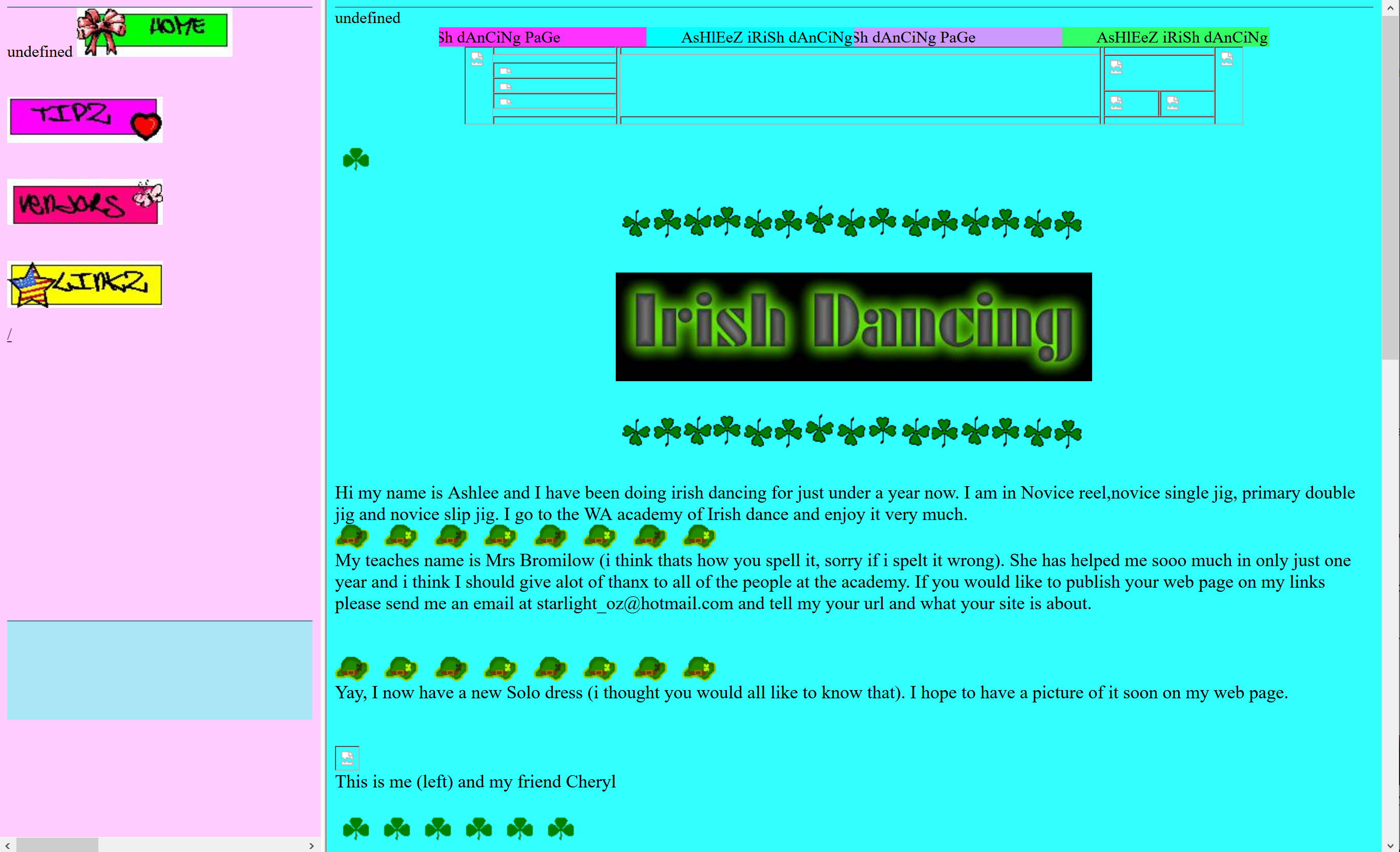
We used to be really excited about making websites. If you had an interest, or just an interest in posting before posting was a concept, you made a website for it. Websites were social media before social media. They served as a meeting place, as a form of social currency. We would interact with each other through email and guestbooks and webrings and message boards, then instant messenger when we really got friendly. You might have a gallery, if you had access to a scanner or a digital camera. You might have a diary of your day (or, in our case, our dance). You might have pages just filled with a bunch of gifs you like, serving no point other than because it's fun. Maybe you'd change your layout every week, or every day. Maybe you'd constantly look for midi versions of your favorite song. People reminisce about the customization of MySpace, but the ultimate test was a plain Geocities address and a journey to Funky Chickens HTML Help.
For Irish dance, this was especially exciting because the community was still riding high on the wave of the Riverdance/Lord of the Dance zeitgeist. The Irish dance world had just been cracked open to the masses, and was now a mix of pre-Riverdance kids and adults, and the post-Riverdance beginners.
The online Irish dance world reflected this sea change. Many of the most active websites were run by people who started Irish dance because of or after Riverdance, and they made good, earnest efforts to explain all of the nuances of the dance to a rapidly growing audience. And Irish dance schools got in on it, making websites for the first time.
It was an era of a tiny internet and an earnest love of frame layouts and making graphics out of all of Lois Greenfield's Trinity Irish Dance Company photos. Especially that one. You know the one.
I discovered the Irish dance online world because I was one of those kids who, when they got interested in something, had to know everything about it. Before the internet, it was trips to the library and coming home with stacks of books. After the internet, it was devouring every website I could find, collecting the information, printing the information, and making my own site to share what I now knew. It was also a way of being a part of the wider community of Irish dance, and of making even a tiny mark on it.
I was personally invested in all of the dance diaries. I would read them obsessively, trying to get an idea of what other lessons and other schools were like. Trying to judge my progress by theirs.
Though Irish dance was growing in popularity outside of Ireland and the diaspora, it was (and still is) a relatively niche dance community. Some areas in the world are stacked with Irish dance schools, but most places aren't. My school was the first and, at the time, only one in my city, so having others to talk to and be inspired by was a bonus.
As all Irish dancers know, filming competitions is strictly verboten. People of a certain age probably have no videos of their competitions, whether feis or major. Before FeisTV, unless you were at these competitions or the dancers were from your school, you didn't get as much exposure to dancing around the world. Going online helped to change this. It's how I learned so much about dancing (the names of the dances, the shoes, a bird leap, what a feis was and how to pronounce it) before I even started. We may not have had video, but people did have 35mm, and dance galleries were extremely popular.
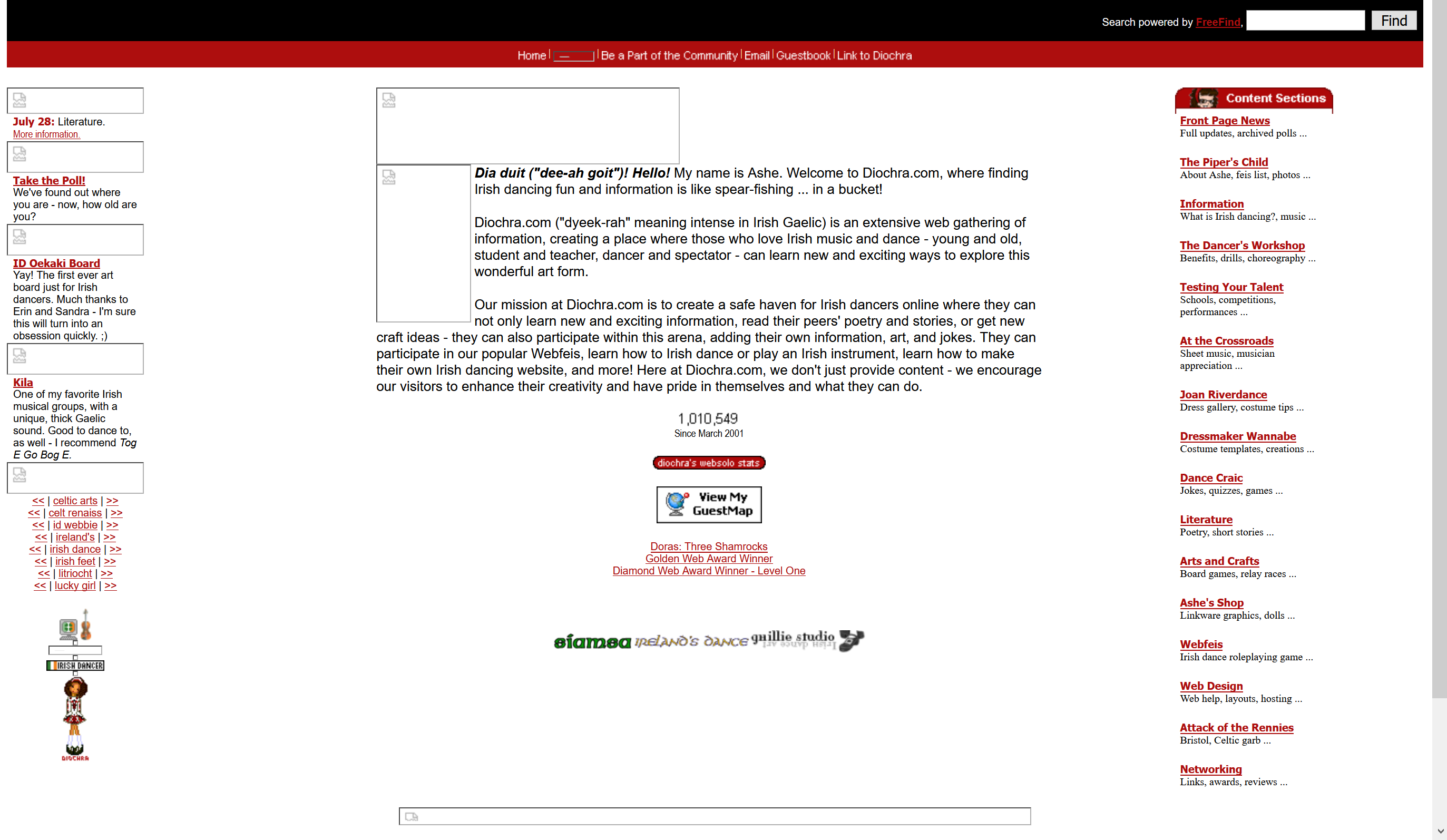
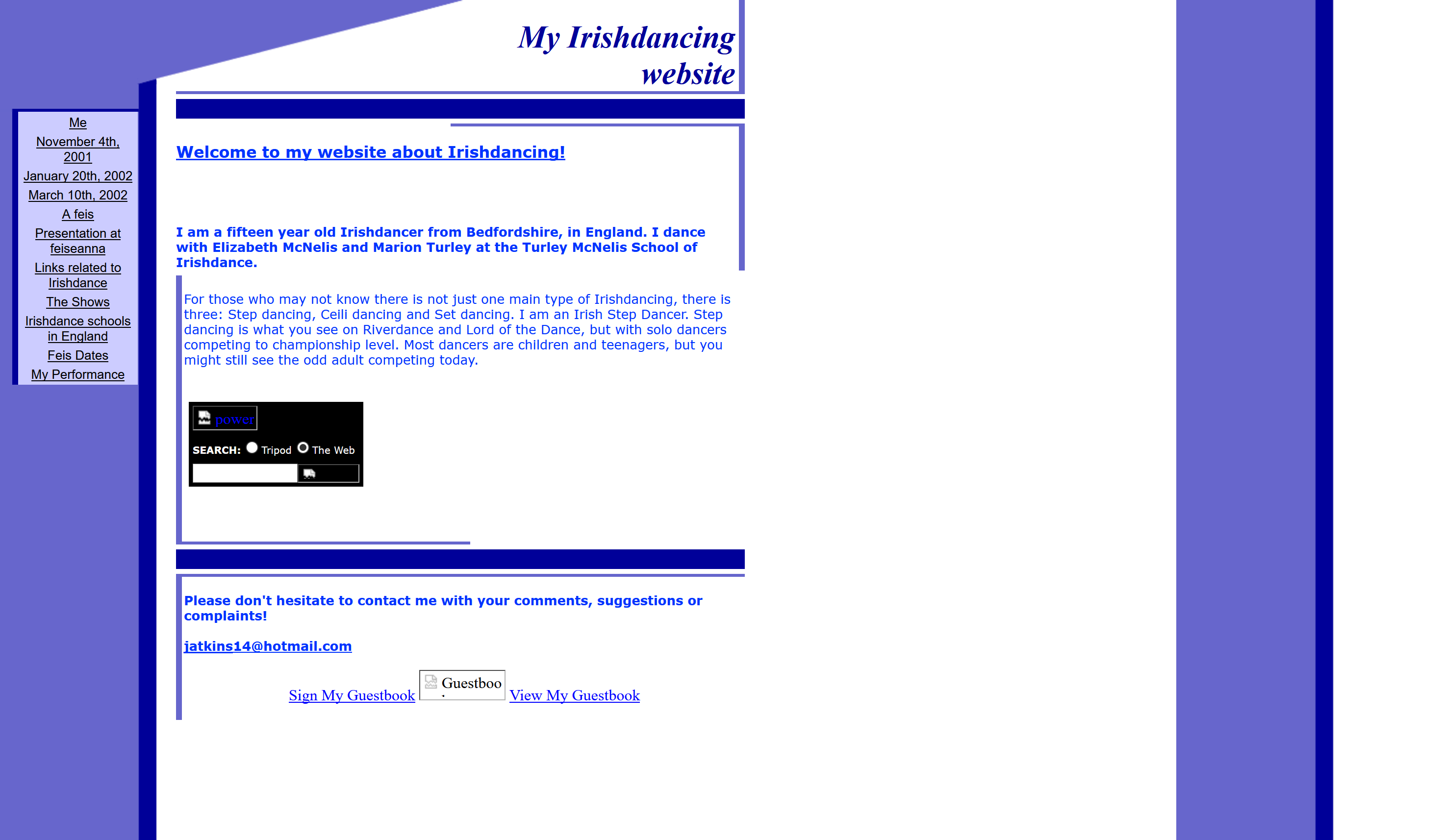
 Irish dance sites ran the gamut from humor-based (Siamsa), to encyclopedic documentation (Diochra). One large, early site was run by the dad of a young champion dancer from England (was that irishdancer.co.uk, or something similar?). That was the first place I learned what feis meant. There were lots of tales of soft spike curlers and the various apocryphal histories of Irish dance. Sometimes a page dedicated to someone's favorite professional Irish dancer, whether it was Eileen Martin or Natalie Sliwinski. The journey of designing a solo dress, or of dream solo dresses, or of all the costumes a person has had, was also a popular choice. You might even get some how-tos for basic things, whether it's how to treble (and bear in mind, there were no videos), or how to curl the hair.
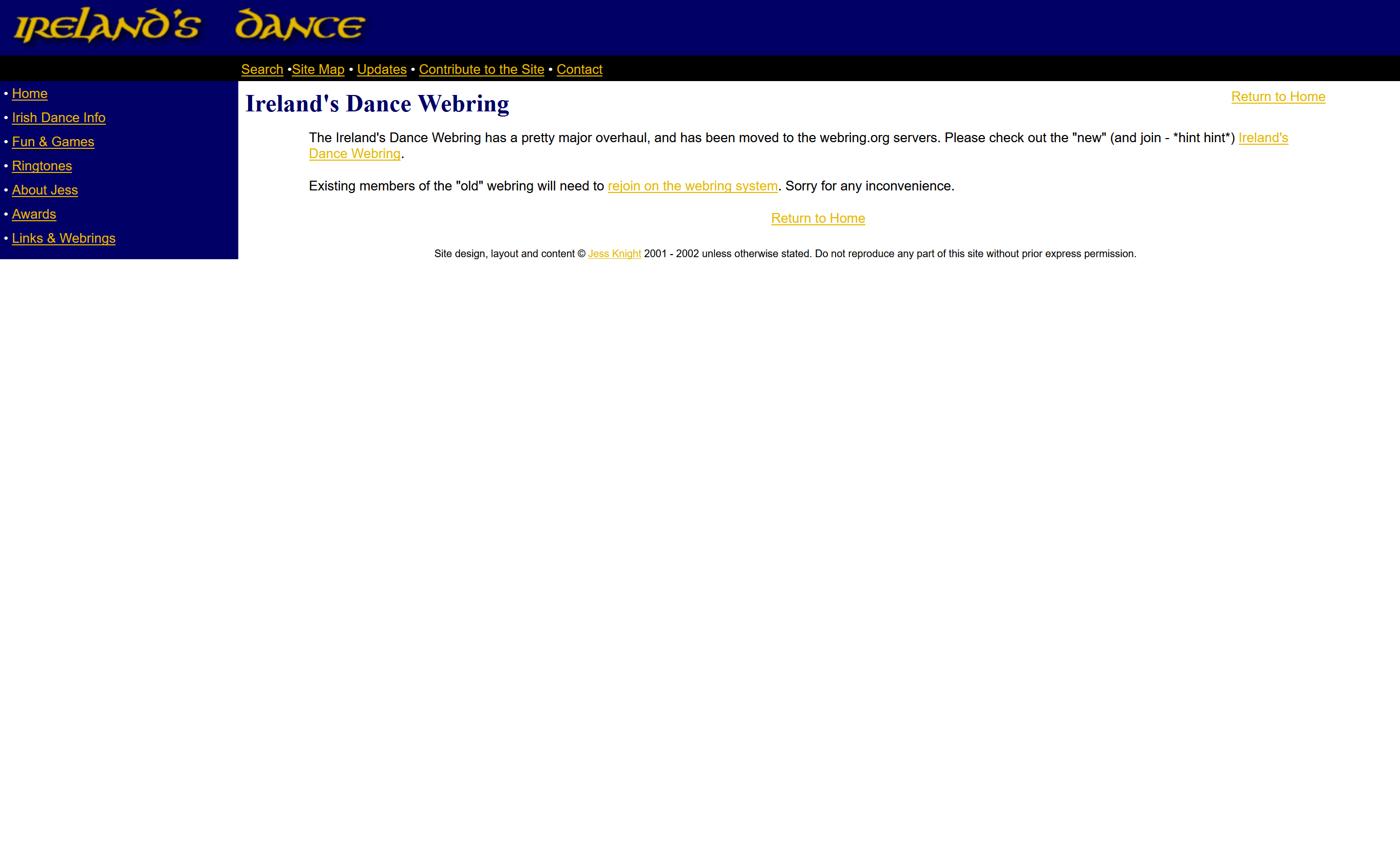
By the earliest 2000s (we're talking 1999-2002), most of the active sites became less independent venture, and more social hub. There were many Irish dance webrings that united people (for the uninitiated, a webring was a way for sites to become affiliated with each other by some qualification, and you would put a graphic on your site that had links to the next or previous site in the ring). Forums appeared, run by different webmasters, where more and more familiar names would join. (The Voy gossip forums also appeared, and were just as hateful then as now!)
Another popular element was the website award. You could make a graphic for the winner and give it to some site you liked. Sometimes people submitted their site, and sometimes it might be awarded at random. Irish Feet had one, and won some (never a professional web award, let's be real).
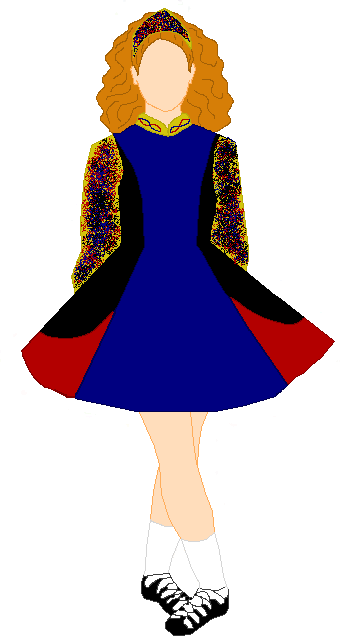
Perhaps the online Irish dance community reached its zenith with the creation of Webfeis, a part of Diochra.com. This was a roleplaying game where we all created characters, were assigned schools in a fictional version of Ireland, and competed by doing things like writing poems based on different themes. We had an oireachtas! My dancer placed! Graphic elements were made, including solo dresses "for sale," and I made pixel art of the dancers. Everyone made their character little websites with competition results and diary entries. We also had wonderful in-character drama, long hours spent in AOL chatrooms together, and delightful forum posts that still existed until it was recently wiped by a hacker.
Most of the old sites are gone, or so badly broken that they are but a husk of What Used to Be. A lot were hosted by GeoCities and thus have been sucked into the void once thought impossible: gone from the internet (unless captured by the Wayback Machine).
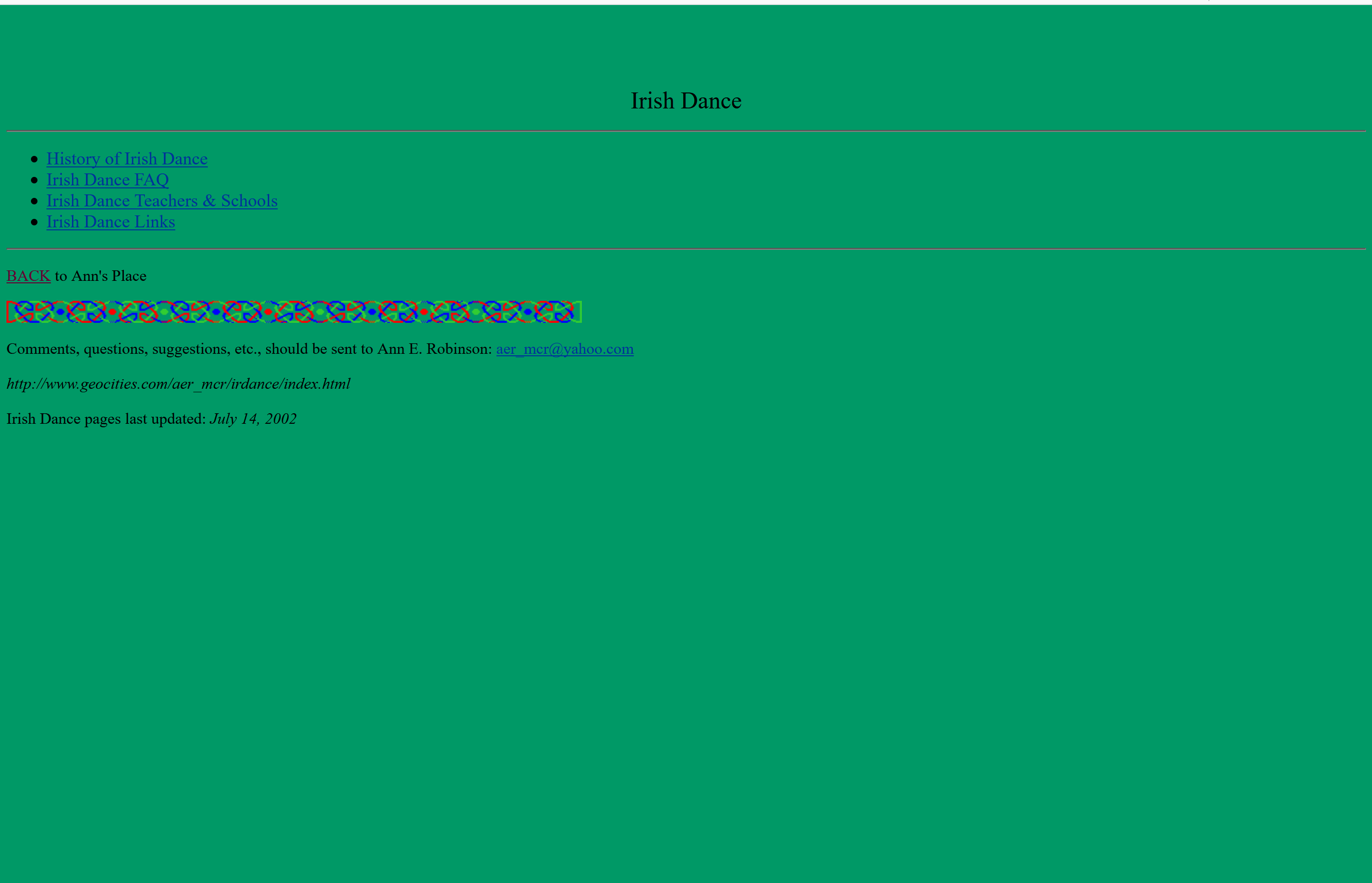
 We even lost the two motherships of Irish dance information on the internet, Ashley Middleton’s Diochra.com, and Ann's Place. However, Ashe is still firmly entrenched in Irish dance, so at least we haven’t lost her where it counts most.
As for Ann's Place, well, it's a lot easier to find Irish dance schools than it used to be. But, for a while, that was a fairly comprehensive online phonebook of every dance school around the globe.
By as early as 2003, the online Irish dance world began to change. Blogging became more of an institution, causing a lot of the hand-coded sites to go into stasis as people jumped to easier platforms. I began to update my LiveJournal instead of my dance diary. As a result, webrings and awards that helped foster interaction became defunct. Many of the most active dancers retired or quit or just grew out of being online all the time. MySpace and Facebook took people's attention. And so it was that the Golden Age of Irish Dance (Websites) saw its twilight.
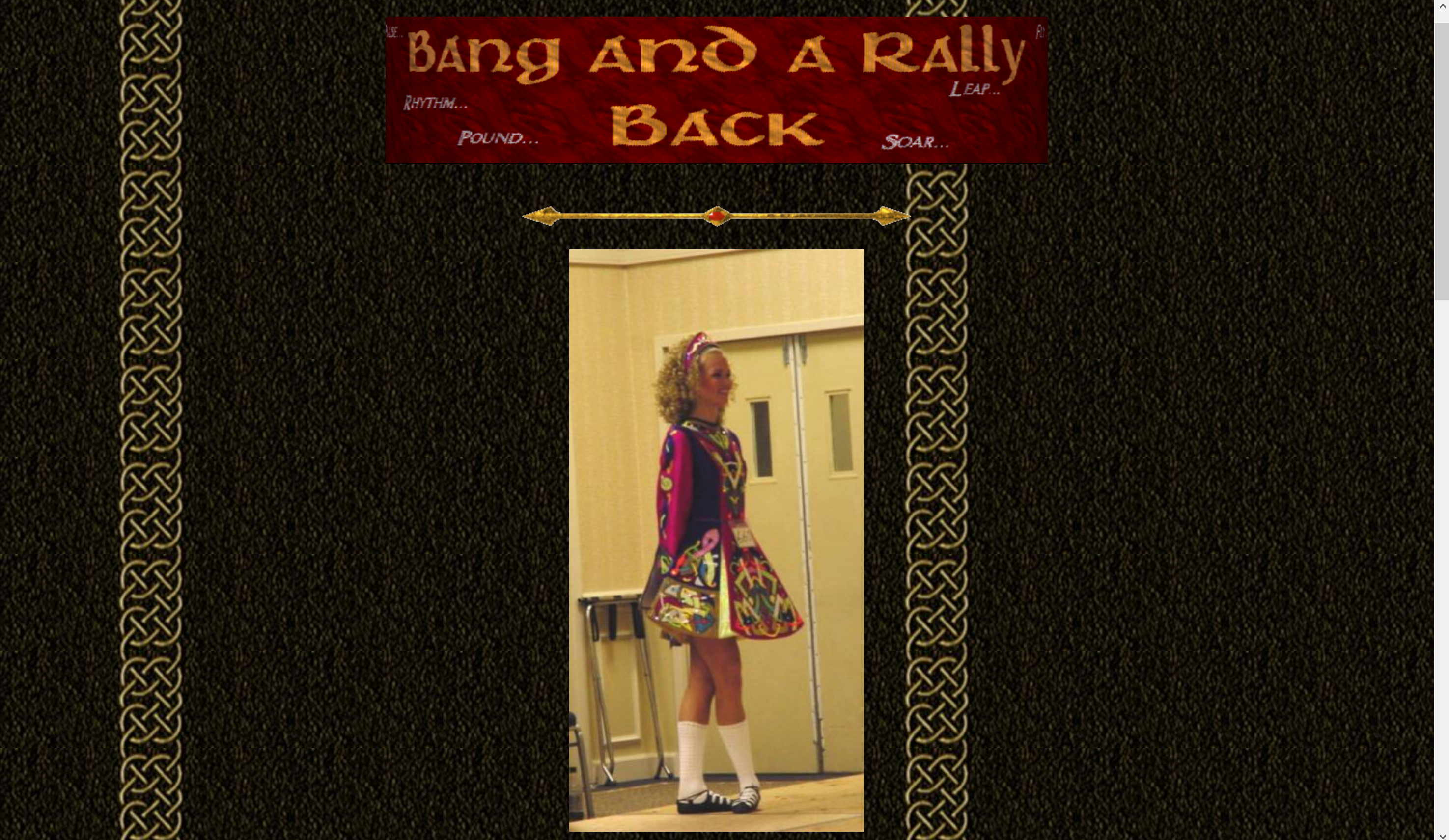
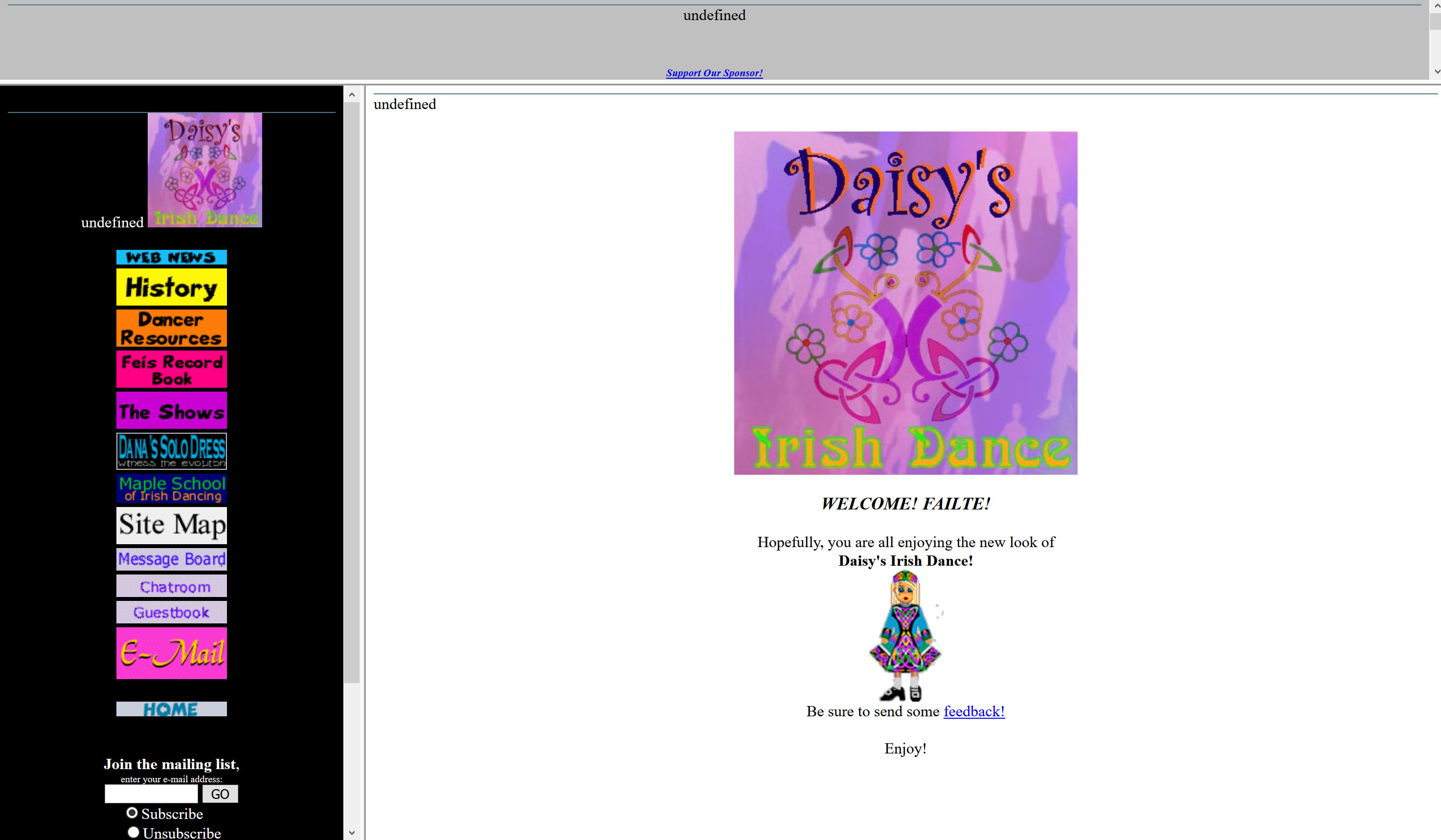
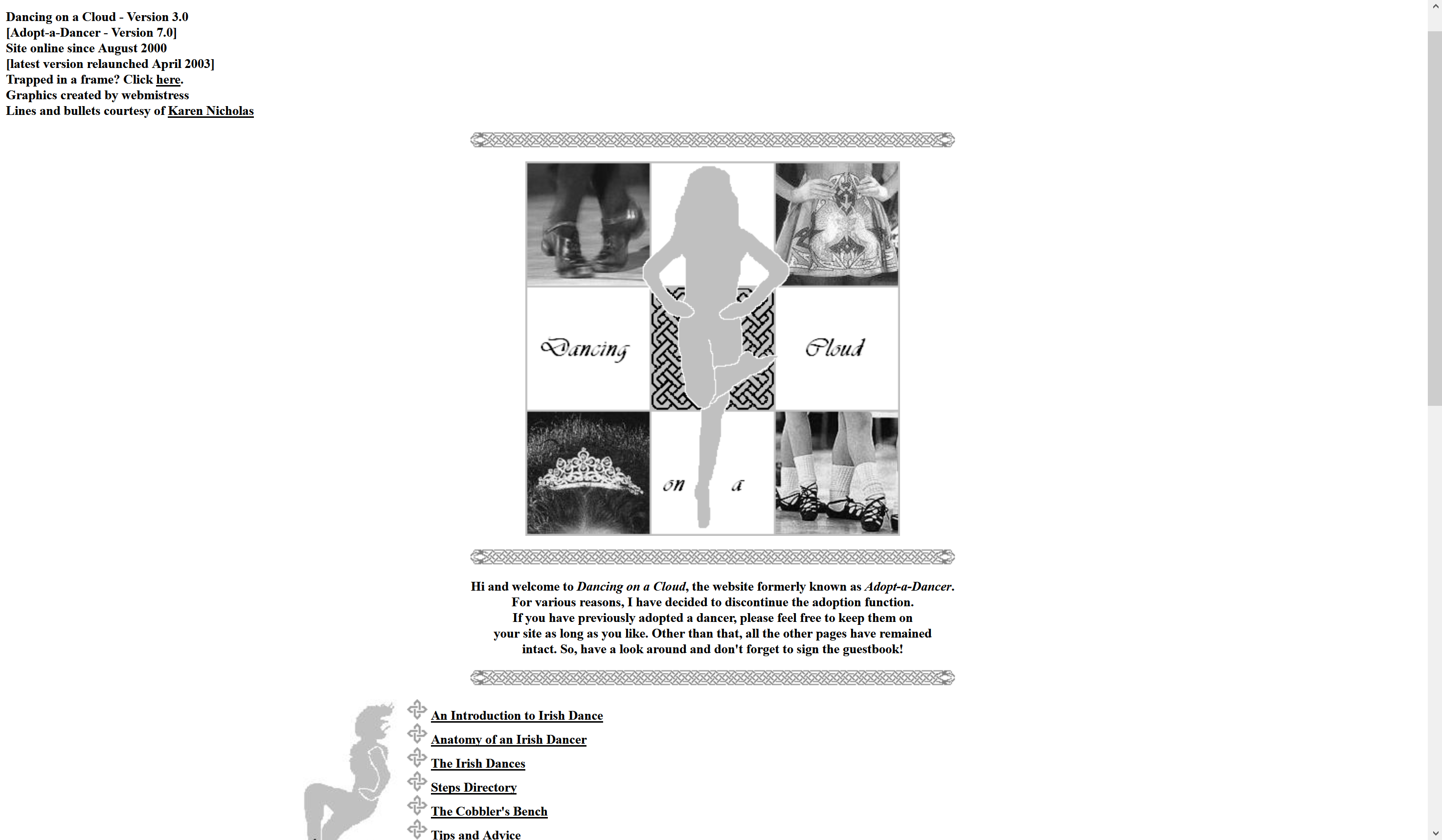
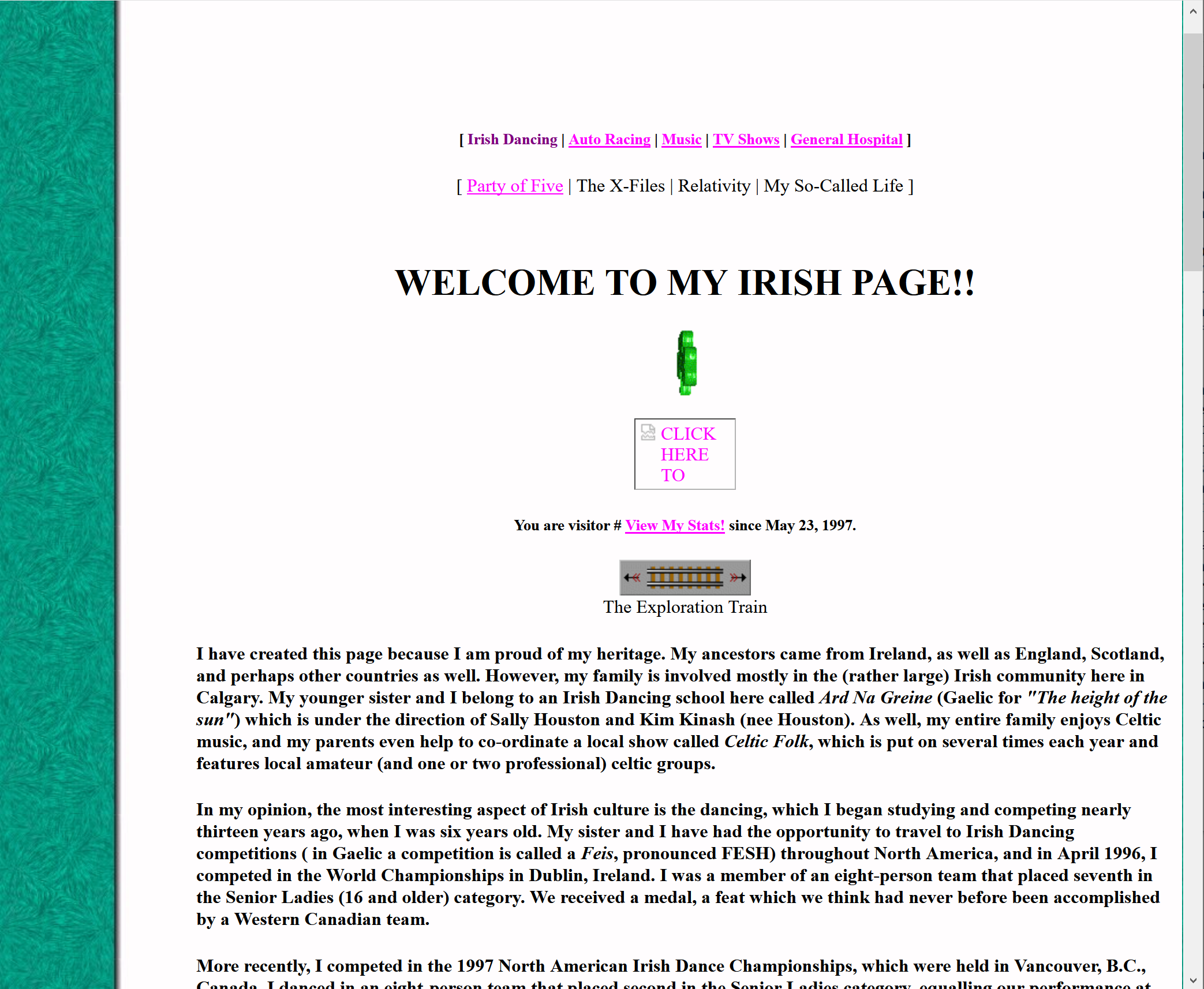
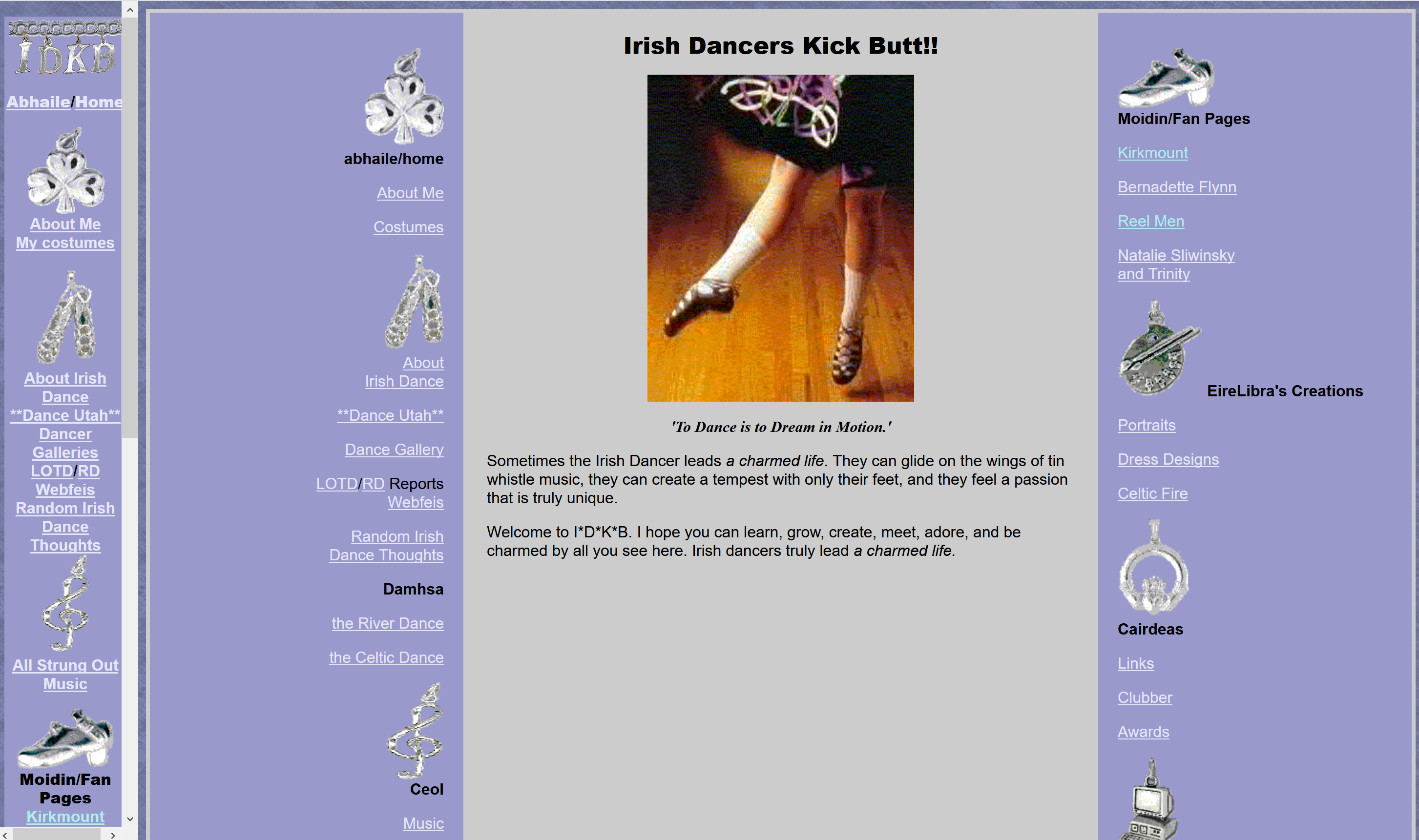
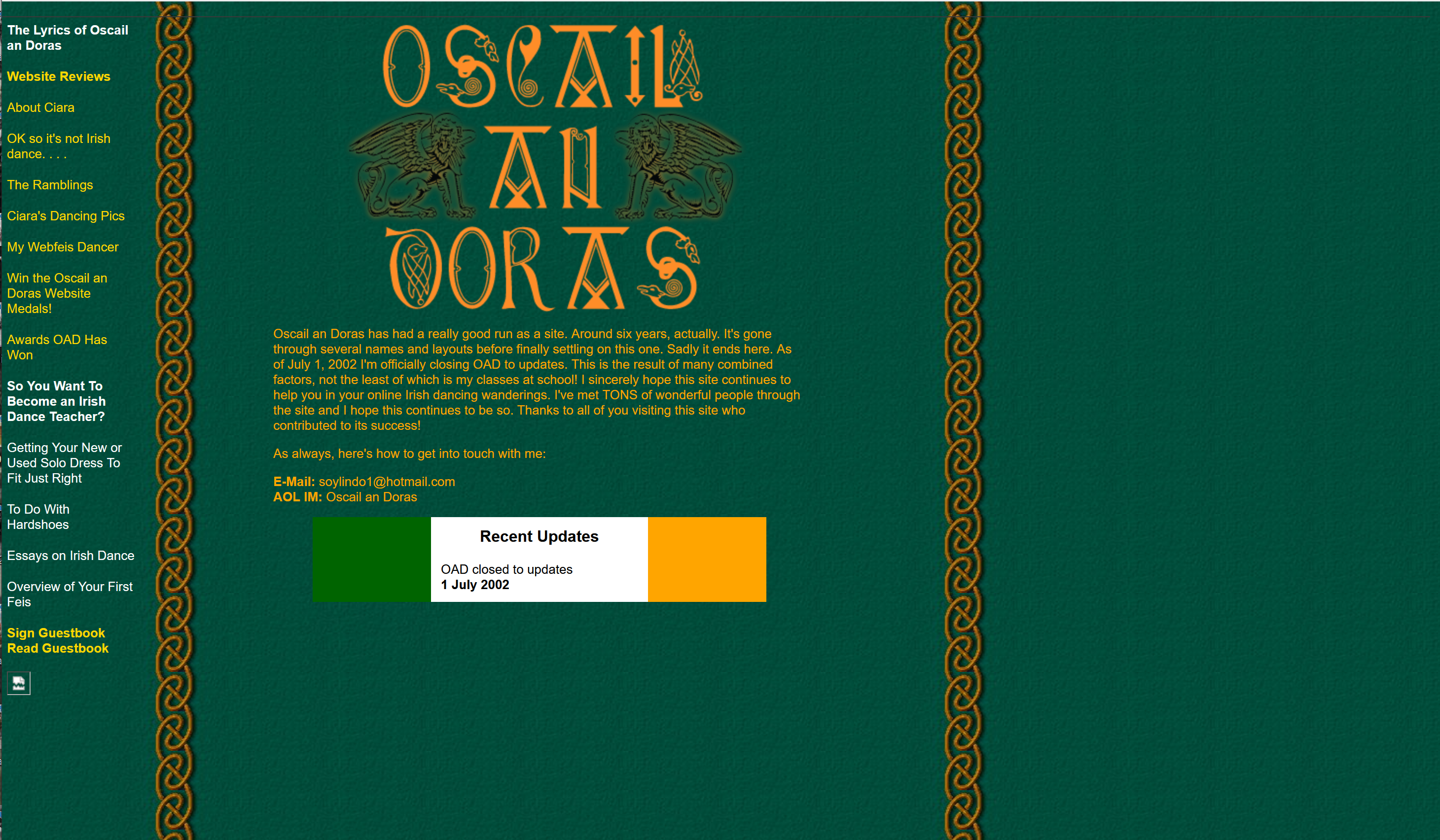
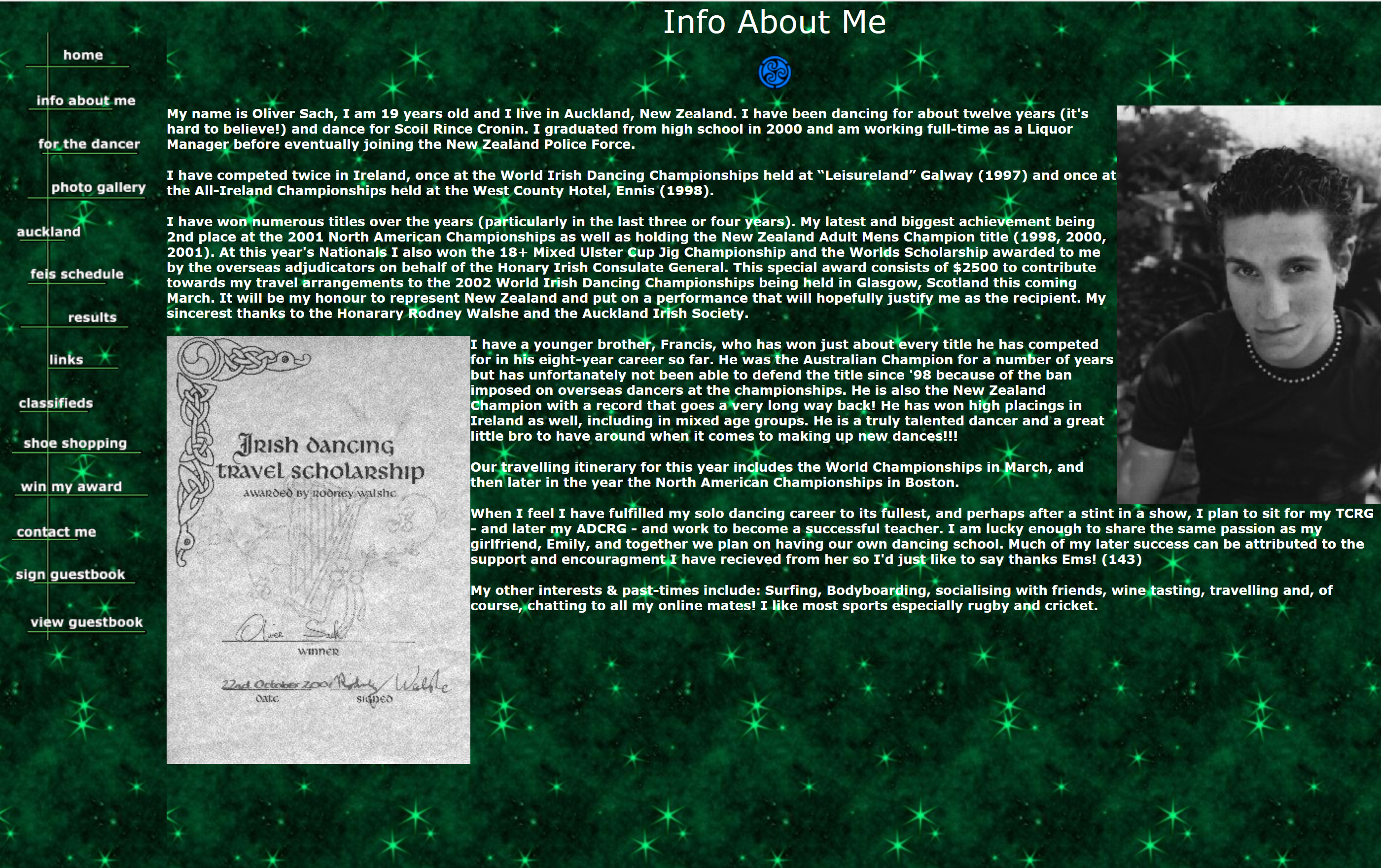
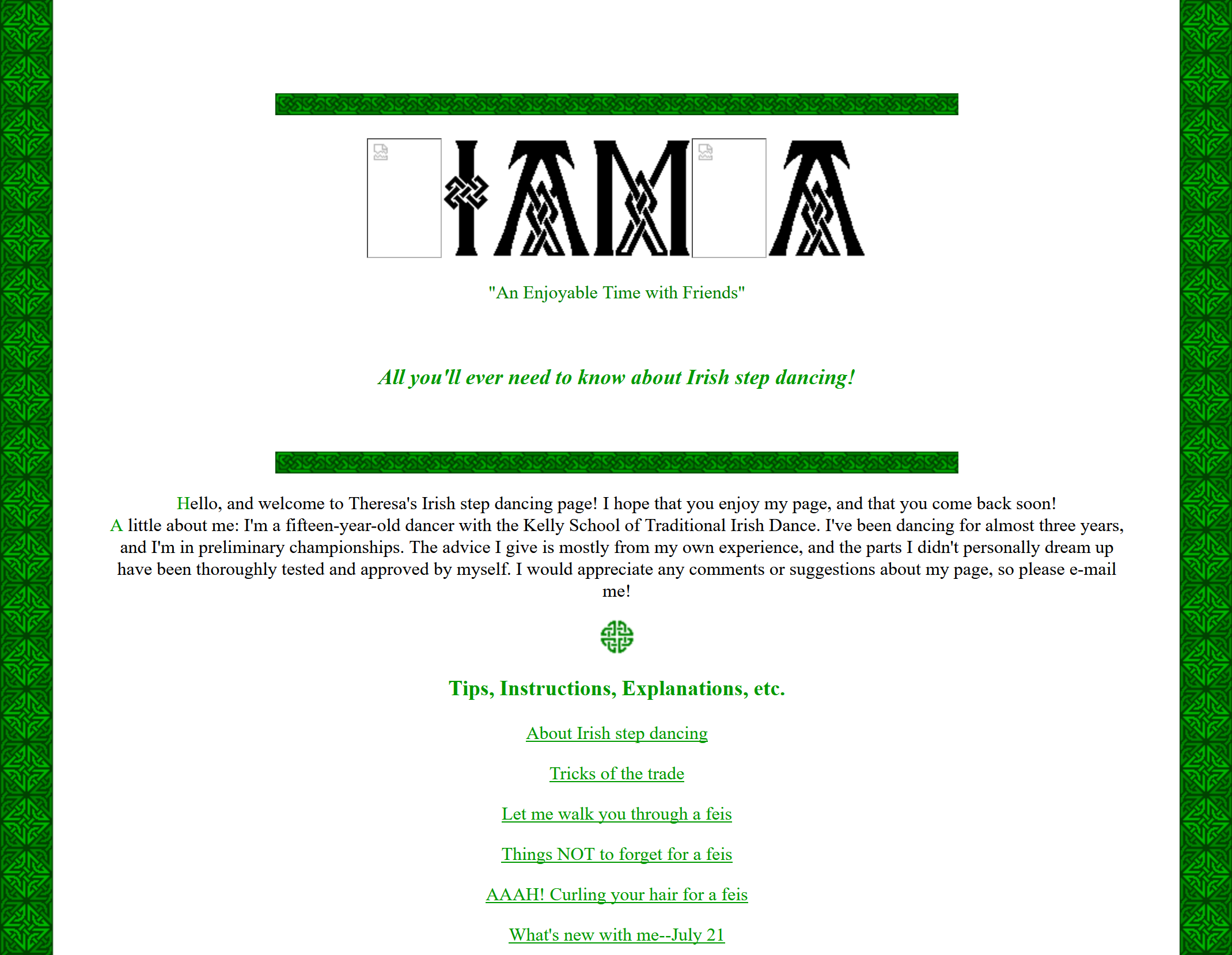
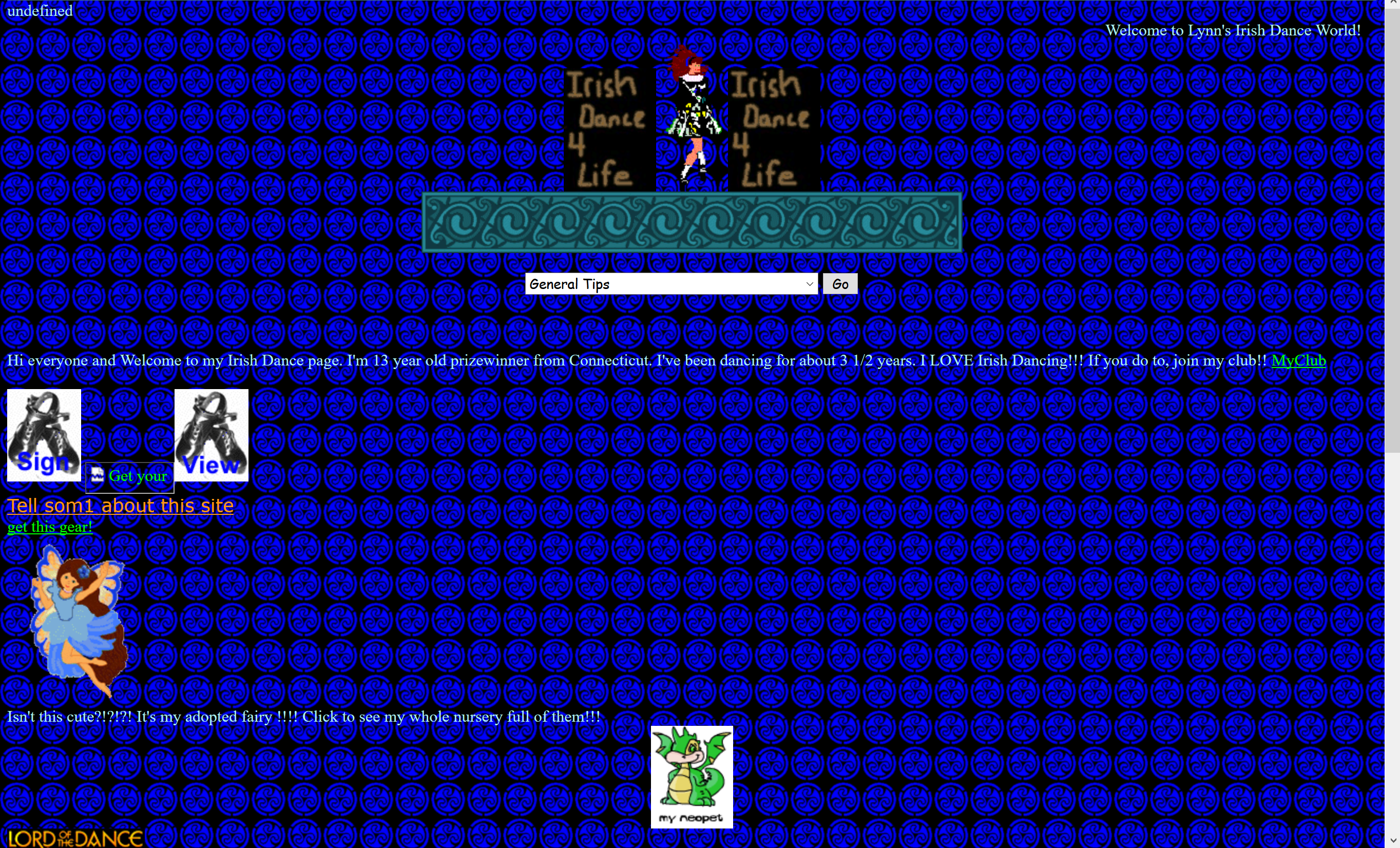
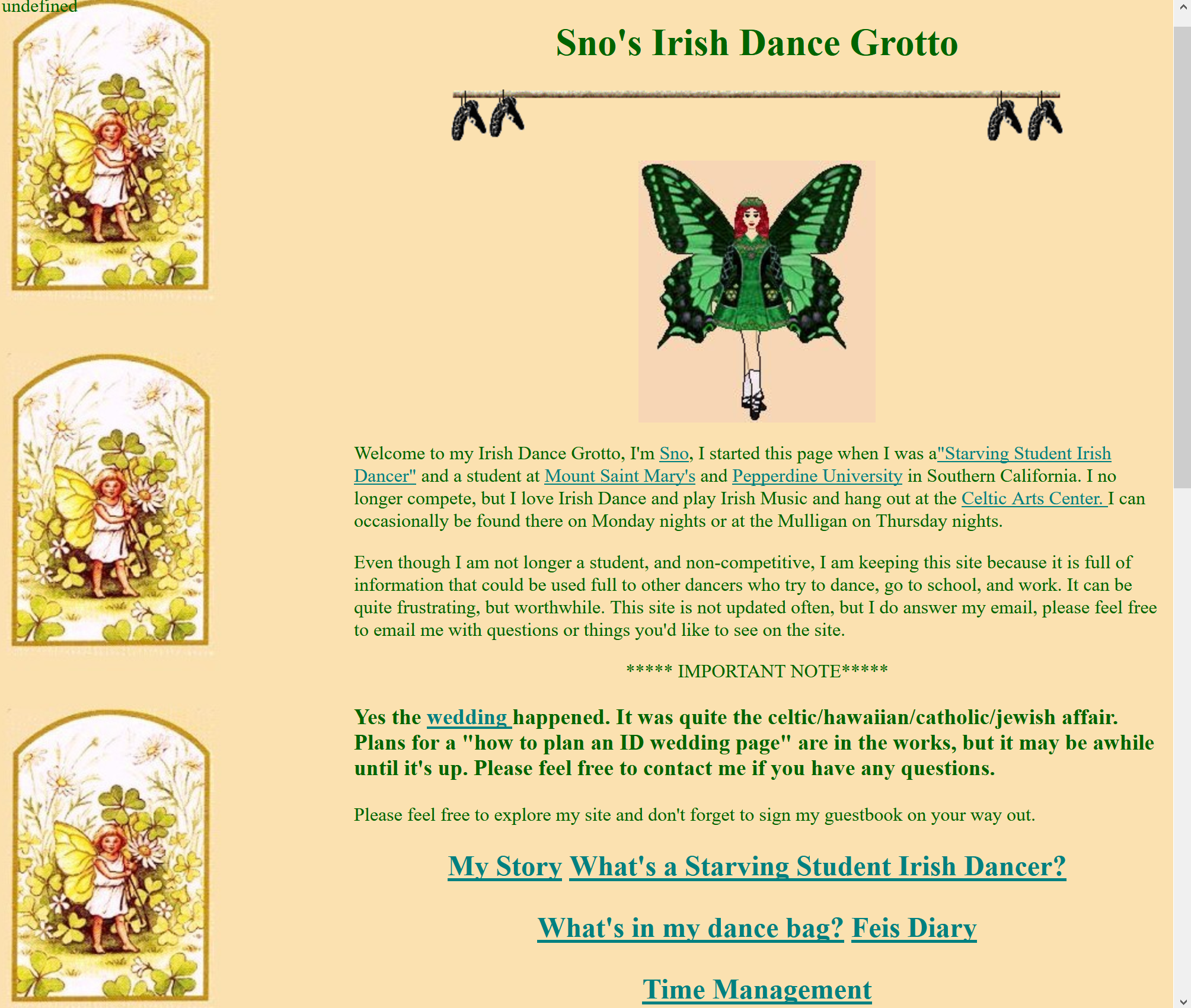
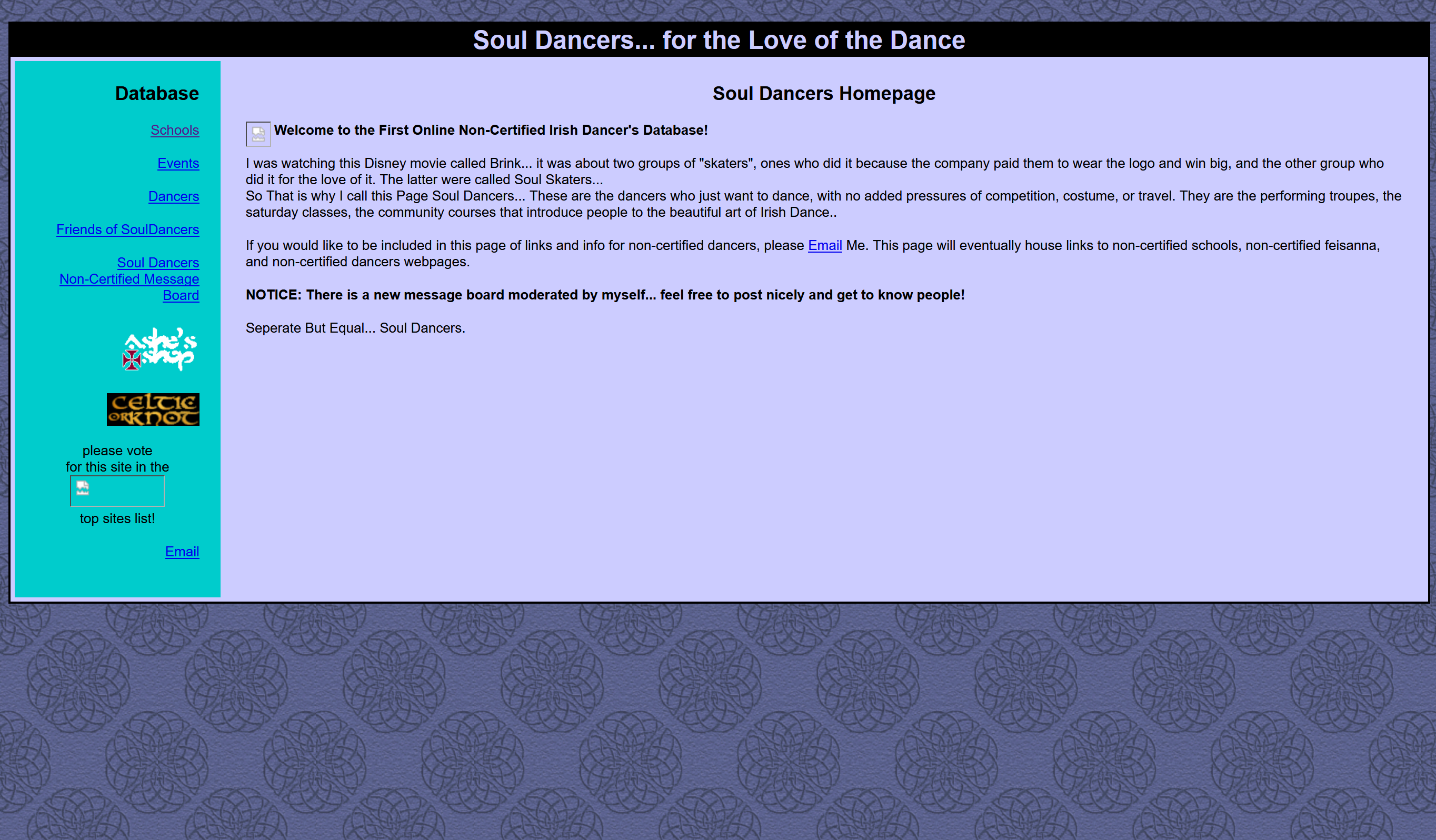
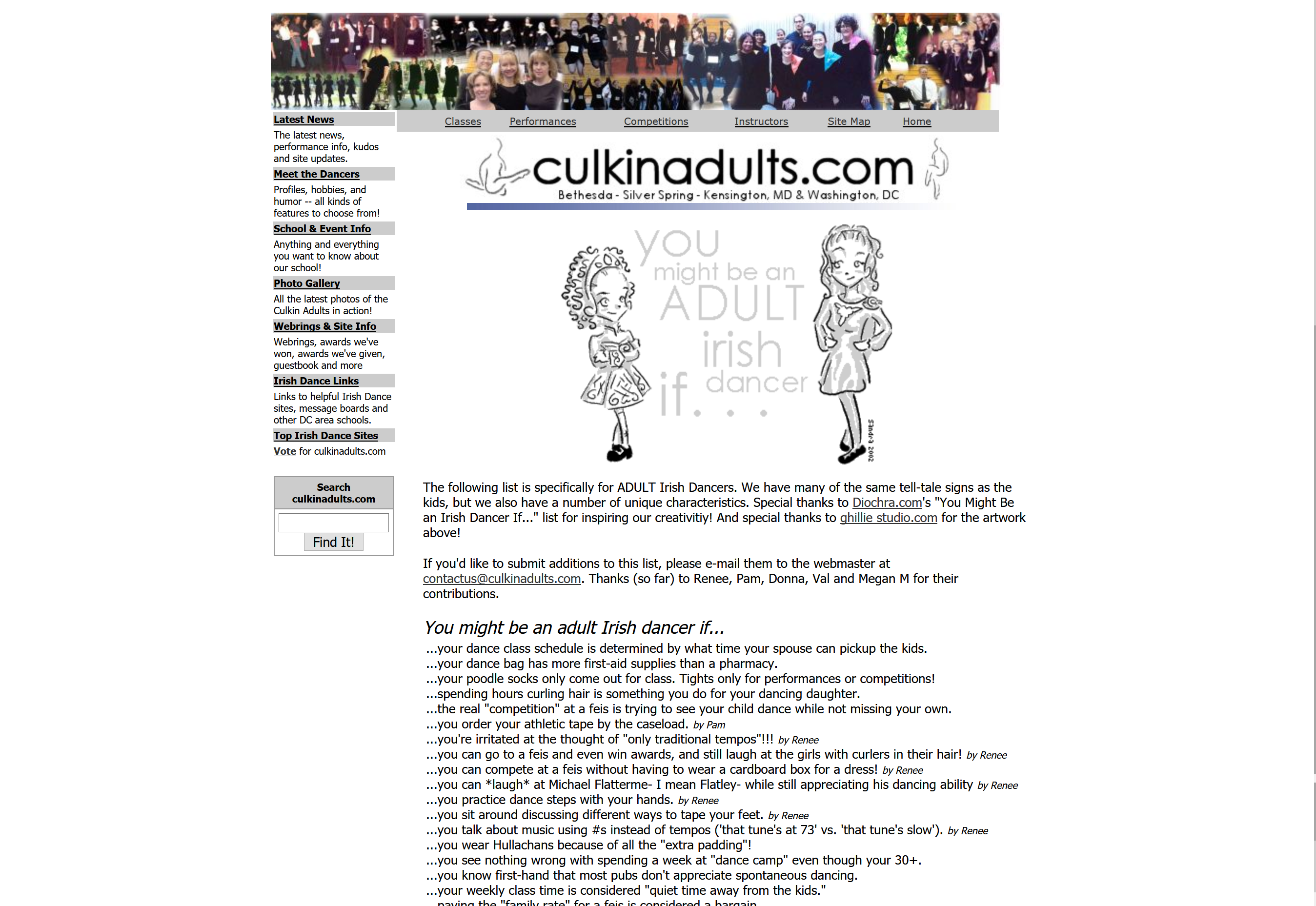
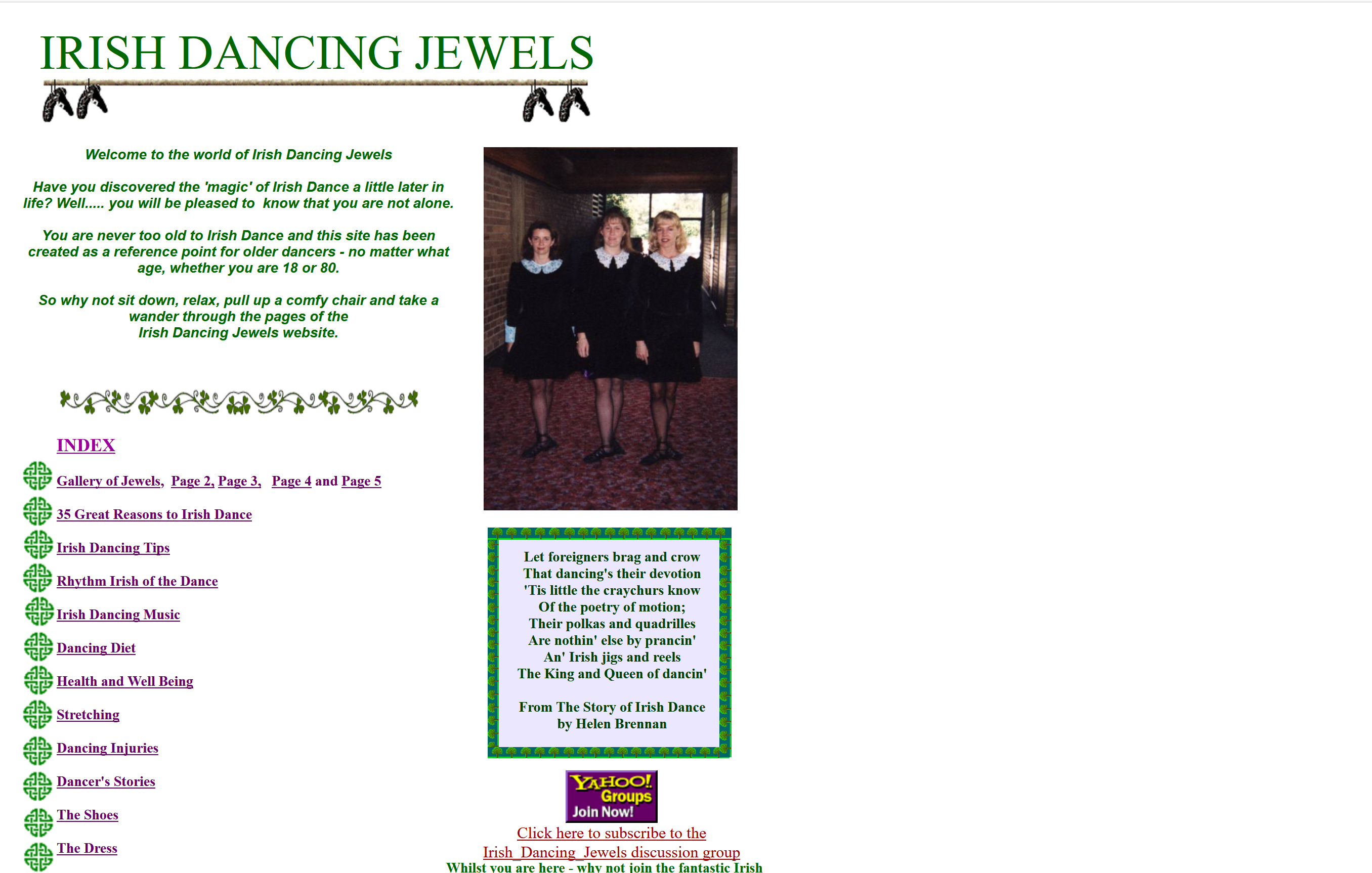
Below are many of the major players as captured in 2019. Some are still live, but frozen in time. Others were only found using the Wayback Machine. A few have disappeared completely (cheers to you, Clickyfeet).